Is IQ Inherited? What Science Really Says About Intelligence
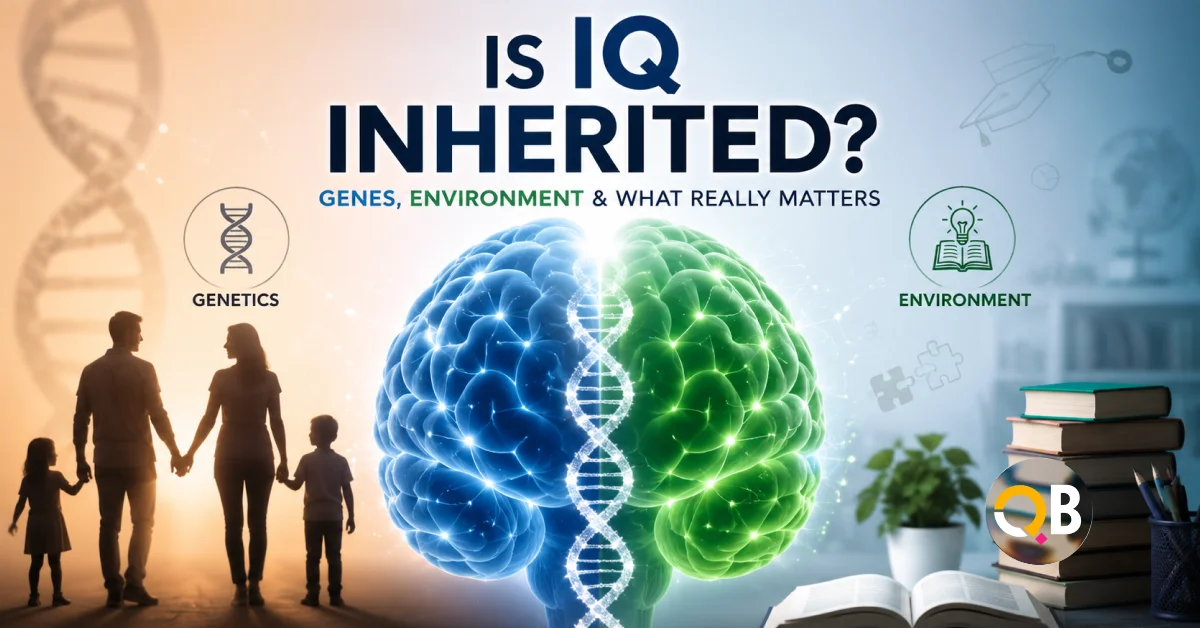
Few questions about intelligence spark as much curiosity as whether IQ is inherited. If you’ve ever wondered why some families seem to produce generations of high achievers, or whether your own intelligence is largely determined by your parents, you’re not alone.
The short answer is that IQ is influenced by genetics, but it is not determined by genetics alone.
Modern research shows that intelligence develops through a complex interaction between inherited genes and life experiences. Your DNA provides a foundation, but factors such as education, nutrition, health, sleep, relationships, and lifelong learning all contribute to how your cognitive abilities develop over time.
This is encouraging because it means intelligence is not a fixed destiny. While people naturally differ in cognitive strengths, everyone has opportunities to develop skills, improve reasoning, and reach more of their intellectual potential.
In this guide, we’ll explore what scientists know about inherited intelligence, how much genes really matter, why siblings can have different IQs, and what this means for anyone interested in measuring or improving cognitive ability.
What Does “Inherited IQ” Actually Mean?
When people ask whether IQ is inherited, they often imagine intelligence being passed down like eye color or blood type. The reality is much more nuanced.
Intelligence is considered a polygenic trait, meaning it is influenced by thousands of different genes rather than a single “intelligence gene.” Each of these genes contributes only a tiny effect, and their influence depends heavily on the environment in which a person grows and learns.
Think of genetics as providing a range of possibilities rather than a fixed number.
For example, two children may inherit similar genetic potential for reasoning ability, but if one grows up with excellent nutrition, stimulating education, supportive teachers, and opportunities to solve problems, that child may develop different cognitive skills than someone raised without those advantages.
Researchers often describe intelligence as the result of two forces working together:
- Genetic inheritance
- Environmental experiences
Neither tells the whole story on its own.
This balance explains why scientists no longer ask whether intelligence comes from “nature or nurture.” Instead, the focus has shifted to understanding how nature and nurture constantly interact throughout life.
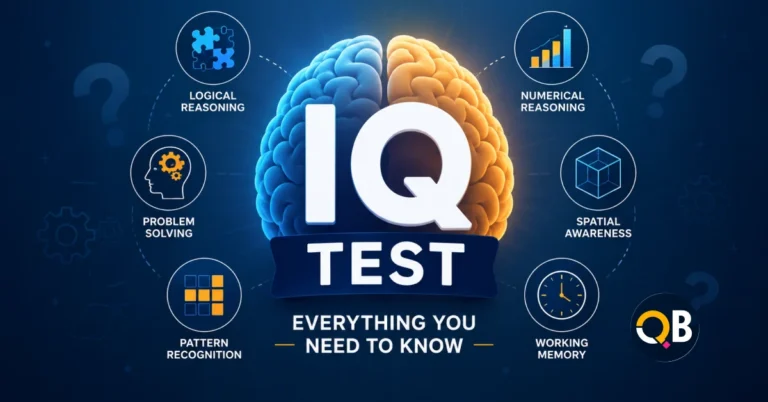
If you’re unfamiliar with how intelligence is measured in the first place, our guide to What Is an IQ Test? Everything You Need to Know offers a helpful introduction before exploring the role genetics plays.
How Much of IQ Is Genetic?
One of the most common statistics you’ll hear is that IQ is “50 to 80 percent heritable.” At first glance, that sounds like scientists believe genes determine most of your intelligence.
That isn’t what heritability means.
Heritability describes how much of the differences between people in a population can be explained by genetic variation under specific environmental conditions. It does not mean that 80 percent of your own intelligence comes from genes and 20 percent comes from your environment.
Here’s a simple example.
Imagine a classroom where every student has access to excellent schools, healthcare, nutrition, and family support. Since their environments are relatively similar, more of the differences in IQ scores may be linked to genetics.
Now imagine another group where educational opportunities vary dramatically. In that case, environmental differences become much more influential, and heritability estimates may be lower.
This is why scientists emphasize that heritability is a population statistic rather than a prediction for any individual person.
Research involving twins, adopted children, and families consistently suggests that genetics plays a significant role in intelligence, but it never acts in isolation.
Perhaps the most important takeaway is this:
Inherited potential is not the same as guaranteed outcomes.
Why Identical Twins Help Scientists Understand Intelligence
Much of what researchers know about inherited intelligence comes from twin studies.
Identical twins share nearly all of their genes, while fraternal twins share about half, just like ordinary siblings.
By comparing similarities in IQ between these groups, scientists can estimate how strongly genetics contributes to intelligence.
Over decades of research, several consistent findings have emerged.
Identical twins usually have more similar IQ scores than fraternal twins.
Twins raised apart often remain surprisingly similar in cognitive ability, suggesting that genetics has a meaningful influence.
At the same time, twins raised together also share environments, schools, families, and cultural experiences, making environmental factors impossible to ignore.
Adoption studies tell a similar story.
Children may resemble their biological parents in some aspects of cognitive ability as they grow older, yet the quality of their adopted home, educational opportunities, and social environment still significantly affect intellectual development.
Rather than proving that intelligence is predetermined, these studies reinforce a more balanced conclusion:
Genes matter, but experiences matter too.
Can Parents Predict Their Child’s IQ?
Parents naturally wonder whether their own intelligence predicts how intelligent their children will become.
The answer is “to some extent,” but not with any precision.
Children inherit a unique mix of genes from both parents. This genetic recombination means siblings often receive different combinations of traits, which is one reason brothers and sisters can display noticeably different cognitive strengths.
Even highly educated parents cannot accurately predict a child’s eventual IQ score.
Many other influences shape development, including:
- Early childhood learning experiences
- Language exposure
- Emotional security
- Nutrition
- Physical health
- Quality of education
- Sleep habits
- Motivation and curiosity
These factors continue affecting cognitive development throughout childhood and adolescence.
It’s also worth remembering that IQ measures only certain kinds of reasoning and problem-solving ability. Creativity, emotional intelligence, persistence, communication skills, leadership, and practical judgment all contribute to success in life but aren’t fully captured by a traditional IQ score.
If you’re curious about how IQ compares with other forms of intelligence, our article on IQ vs EQ: What’s the Difference? explores why cognitive ability is only one part of the bigger picture.
Curious how your reasoning skills compare? Try the IQ Test to explore your logical thinking, pattern recognition, and problem-solving abilities.
Why Siblings Can Have Very Different IQ Scores
One question often surprises people:
If intelligence is inherited, why can siblings seem so different?
There are several reasons.
First, siblings do not inherit identical combinations of genes. Even full brothers and sisters share only about half of their genetic variation on average.
Second, children rarely experience exactly the same environment.
Parents naturally adapt their parenting styles over time. Birth order can influence experiences. Friend groups differ. Teachers differ. Interests develop independently.
One sibling may discover a passion for mathematics while another excels in language or music. Those interests encourage different types of learning and cognitive development.
Scientists call these non-shared environmental influences, and they help explain why children growing up in the same household can become quite different adults.
This reminds us that intelligence is dynamic rather than predetermined.
Some people develop exceptional reasoning skills because they continuously challenge themselves with puzzles, reading, education, and intellectually demanding careers.
Others may never fully develop their cognitive potential simply because they lacked opportunities or encouragement.
That distinction is one reason researchers continue studying both genetics and environment together instead of treating them as competing explanations.
Can IQ Change Even If It Is Partly Inherited?
One of the biggest misconceptions about intelligence is that if IQ has a genetic component, it must remain fixed throughout life. Fortunately, research paints a far more hopeful picture.
Genes may influence your starting point, but they do not lock your intelligence into a permanent level. The brain is remarkably adaptable, especially during childhood, but it continues to change well into adulthood through a process known as neuroplasticity.
Neuroplasticity is the brain’s ability to reorganize itself by forming new neural connections. Every time you learn a new skill, solve a challenging problem, or master unfamiliar information, your brain strengthens and refines these pathways.
This doesn’t necessarily mean that your IQ score will increase dramatically overnight. Instead, it means that many of the abilities measured by IQ tests, such as logical reasoning, pattern recognition, memory, and problem-solving, can improve with consistent practice and healthy habits.
Researchers have identified several factors that support cognitive development throughout life:
- Quality education and lifelong learning
- Regular physical exercise
- Adequate sleep
- Balanced nutrition
- Reading and intellectual hobbies
- Social interaction
- Managing stress effectively
These factors may not rewrite your genetic blueprint, but they can help you make the most of the cognitive potential you already have.
If you’re interested in the science behind this topic, our guide on Can IQ Change Over Time? explores how intelligence develops across different stages of life.
The Role of Epigenetics: When Environment Influences Genes
An exciting area of modern research is epigenetics, which studies how environmental factors can influence the activity of our genes.
Rather than changing the DNA sequence itself, epigenetic processes affect how certain genes are switched on or off. Lifestyle, nutrition, stress, exercise, exposure to toxins, and early childhood experiences may all influence these biological mechanisms.
Scientists are still uncovering exactly how epigenetics relates to intelligence, but one important lesson has already emerged:
Genes are not operating in isolation.
Imagine two people with very similar genetic potential. One grows up in an environment filled with books, conversations, supportive teachers, and opportunities to explore new ideas. The other experiences chronic stress, poor nutrition, and limited educational resources.
Even with comparable genetic backgrounds, their cognitive development may follow very different paths.
This interaction between biology and environment helps explain why researchers rarely discuss intelligence as being entirely “genetic” or entirely “learned.” Instead, they see intelligence as the product of an ongoing conversation between our genes and our experiences.
Common Myths About Inherited Intelligence
Because intelligence is such a fascinating subject, it’s also surrounded by myths. Let’s separate some of the most common misconceptions from what research actually tells us.
Myth 1: Intelligence Comes From Only One Parent
You may have heard people claim that intelligence comes primarily from the mother or the father.
Current scientific evidence does not support this idea.
Children inherit thousands of genes from both parents, and intelligence is influenced by many genetic variants spread throughout the genome. There is no single parent responsible for determining a child’s IQ.
Myth 2: High-IQ Parents Always Have High-IQ Children
Although intelligence tends to run in families, there are no guarantees.
Children inherit different combinations of genes, and environmental influences continue shaping cognitive development throughout childhood.
This is why highly intelligent parents sometimes have children with average IQ scores, while children from ordinary backgrounds occasionally develop exceptional reasoning abilities.
Myth 3: If IQ Is Genetic, There’s No Point in Trying to Improve
Perhaps the most damaging myth is the belief that inherited intelligence makes effort meaningless.
Decades of educational and psychological research suggest the opposite.
Learning new skills, maintaining curiosity, solving challenging problems, reading regularly, and pursuing higher education all contribute to stronger cognitive performance over time.
While everyone has natural differences, consistent mental engagement benefits nearly everyone.
Does Intelligence Skip a Generation?
This is another question that appears frequently in conversations about inherited IQ.
People sometimes notice a particularly gifted grandparent and wonder whether intelligence “skips” parents before appearing in grandchildren.
There is no scientific evidence that intelligence follows this kind of predictable generational pattern.
Instead, each child inherits a unique combination of thousands of genetic variants from both parents. This creates enormous diversity, even within the same family.
Other factors also contribute to the appearance of intelligence skipping generations.
For example:
- Educational opportunities may differ between generations.
- Family income and healthcare may improve over time.
- Different generations may develop different talents.
- Modern children often have greater access to technology and learning resources.
These changing circumstances can create the impression that intelligence has suddenly appeared, when in reality both genetics and environment have evolved together.
Can Education Overcome Genetic Differences?
Education is one of the strongest environmental influences on cognitive development.
Research consistently shows that quality schooling improves reasoning, vocabulary, mathematical ability, memory, and problem-solving skills.
Children who receive stimulating educational experiences generally perform better on many cognitive assessments than those who lack access to similar opportunities.
This doesn’t mean education erases every individual difference. People naturally have different strengths and learning styles.
However, education helps individuals move closer to their own potential rather than remaining limited by circumstance.
Beyond formal schooling, learning continues throughout adulthood.
Activities such as:
- Reading widely
- Learning new languages
- Playing strategic games
- Solving logic puzzles
- Developing professional skills
- Exploring unfamiliar subjects
all help keep the brain engaged and adaptable.
If you’re looking for practical strategies, our guide on How to Improve Your IQ explains evidence-based habits that support cognitive performance without promising unrealistic shortcuts.
Measuring Intelligence Responsibly
Because intelligence develops through both inherited traits and life experiences, it’s important to interpret IQ scores with appropriate context.
A well-designed IQ assessment measures specific cognitive abilities under standardized conditions. It does not measure your worth, creativity, kindness, determination, or overall potential for success.
Likewise, online IQ tests vary considerably in quality.
Some provide entertaining brain exercises, while others are carefully designed to assess reasoning abilities using validated question types.
Choosing a reputable assessment is important if you want meaningful results rather than simple entertainment.
If you’re considering taking an assessment yourself, reading Are Online IQ Tests Accurate? can help you understand what separates high-quality tests from unreliable ones.
For those who want to explore their reasoning abilities in a structured format, QuizBombs offers an IQ Test designed to challenge logical thinking, pattern recognition, numerical reasoning, and problem-solving through a variety of engaging questions.
Making the Most of Your Intellectual Potential
So, is IQ inherited?
The most accurate answer is yes, partly, but inheritance is only one piece of a much larger story.
Your genes influence the range of cognitive potential you may develop, but they don’t dictate your future. From early childhood through adulthood, your experiences continually shape how that potential unfolds. Education, curiosity, healthy habits, meaningful challenges, and supportive environments all contribute to intellectual growth.
This perspective is both scientifically accurate and encouraging. Rather than asking whether intelligence is fixed or flexible, it’s more useful to recognize that both biology and experience work together throughout life.
Whether you’re simply curious about cognitive science or considering taking an IQ assessment, remember that an IQ score represents a snapshot of specific reasoning abilities. It is not a measure of your creativity, determination, emotional intelligence, or capacity to learn new things.
If you’d like to better understand your own reasoning skills, pattern recognition, and problem-solving ability, you can try QuizBombs’ IQ Test. It’s designed to provide an engaging cognitive challenge while helping you explore different aspects of logical thinking.
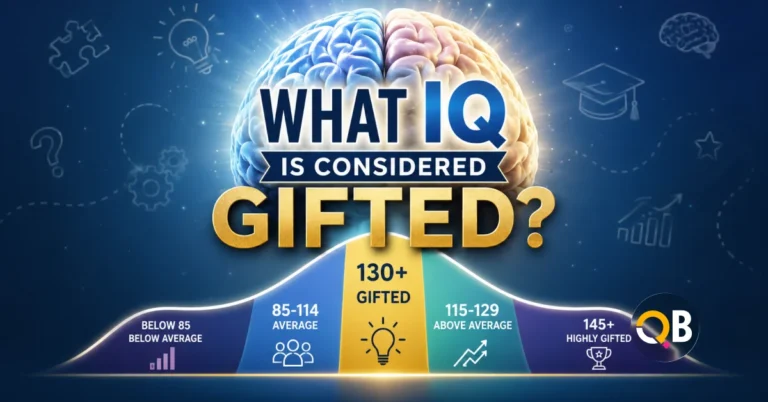
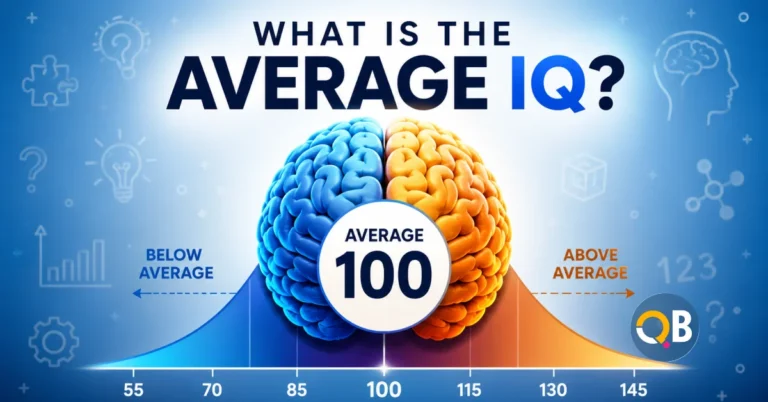
You may also enjoy reading What Is the Average IQ? if you’re curious about how IQ scores are distributed, How to Prepare for an IQ Test for practical tips before taking an assessment, or What IQ Is Considered Gifted? if you’d like to learn how different score ranges are interpreted.
Ultimately, the most valuable measure of intelligence isn’t simply what you’re born with. It’s how you continue learning, adapting, and applying your abilities throughout your life.
Frequently Asked Questions
Is IQ mostly inherited?
IQ is partly inherited, but it is not determined by genetics alone. Research suggests that both genes and environmental factors such as education, nutrition, health, and life experiences influence intelligence.
Can someone with average-IQ parents have a high IQ?
Yes. Intelligence is influenced by thousands of genes inherited from both parents, along with environmental factors. It’s entirely possible for children to have higher or lower IQ scores than either parent.
Does intelligence skip a generation?
There is no scientific evidence that intelligence follows a pattern of skipping generations. Differences between family members are usually explained by unique genetic combinations and different life experiences.
Can you improve your IQ if it’s inherited?
While genetics influence cognitive potential, many abilities measured by IQ tests can improve through learning, practice, healthy habits, and mentally stimulating activities. Most researchers agree that lifelong learning supports cognitive development.
Are online IQ tests reliable?
Some online IQ tests are thoughtfully designed and provide useful insights into reasoning ability, while others are intended mainly for entertainment. Choosing a reputable assessment with well-structured questions is important for obtaining meaningful results.