Can Adults Increase IQ? What Science Says About Brain Growth
Many people assume that IQ is fixed for life. Once you become an adult, the common belief is that your intelligence has already reached its limit. But is that really true?
Modern neuroscience paints a more interesting picture. While your core intellectual abilities are influenced by genetics and early development, your brain remains remarkably adaptable throughout adulthood. You can continue learning, strengthen important cognitive skills, and even improve the way you solve problems, remember information, and process complex ideas.
This doesn’t necessarily mean your IQ score will dramatically increase overnight. Instead, research suggests that many of the mental abilities measured by IQ tests can be developed through healthy habits, continuous learning, and targeted cognitive practice.
Understanding what can and cannot change is important, especially if you’re preparing for an IQ assessment or simply curious about your intellectual potential.
If you’ve ever wondered whether it’s “too late” to become smarter, the answer is encouraging. Your brain never completely stops adapting.
What Does IQ Actually Measure?
Before asking whether adults can increase their IQ, it’s helpful to understand what an IQ score represents.
IQ, or Intelligence Quotient, is designed to estimate a person’s cognitive abilities compared with others in the same age group. Rather than measuring knowledge alone, IQ tests evaluate how efficiently your brain processes information and solves unfamiliar problems.
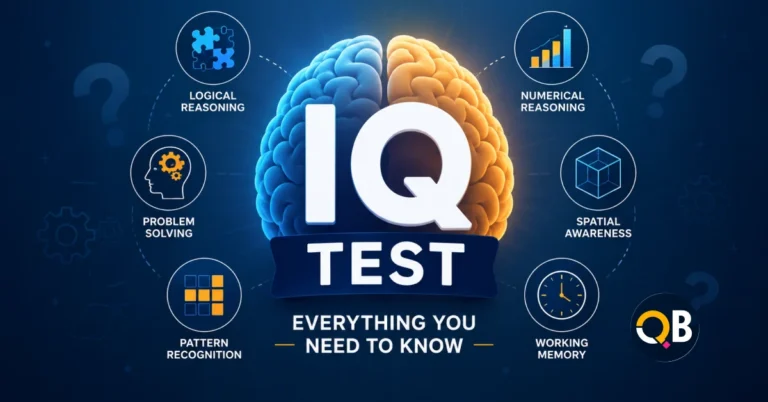
Common areas assessed include:
- Logical reasoning
- Pattern recognition
- Working memory
- Processing speed
- Mathematical reasoning
- Spatial awareness
- Verbal comprehension
These abilities work together to provide an overall estimate of cognitive performance.
Many people mistakenly believe IQ measures creativity, wisdom, emotional intelligence, or practical life skills. In reality, it focuses on a specific set of reasoning abilities under standardized testing conditions.
If you’re new to intelligence testing, our guide on what is an IQ test? Everything you need to know explains how IQ tests work, what they measure, and what your score actually means.
Is IQ Fixed After Childhood?
For decades, psychologists debated whether intelligence becomes fixed after adolescence.
Today, most researchers agree that the answer is more nuanced.
Your genetic makeup establishes a broad range for intellectual potential. However, environmental factors continue shaping how much of that potential you develop throughout your life.
Adults continue forming new neural connections through a process called neuroplasticity. This allows the brain to adapt as you learn new languages, master professional skills, solve unfamiliar problems, or practice challenging mental activities.
That doesn’t mean every adult will suddenly gain 20 IQ points.
Instead, improvements are often gradual and reflect better cognitive efficiency rather than a complete transformation of underlying intelligence.
This distinction explains why some adults perform noticeably better on cognitive assessments after months of focused learning, even if their fundamental intellectual capacity remains relatively stable.
Our article on can IQ change over time? explores the science behind long-term IQ changes in greater detail.
Can Brain Training Apps Really Make You Smarter?
Brain-training apps have become increasingly popular, often promising sharper thinking and higher IQ scores.
The reality is more balanced.
Many cognitive training exercises improve performance on the specific tasks you repeatedly practice. For example, you may become faster at memory games or pattern puzzles after several weeks.
The bigger question is whether those improvements transfer into broader intelligence.
Current research suggests the transfer is modest. While targeted exercises can strengthen certain mental skills, they usually don’t produce dramatic increases across every aspect of intelligence.
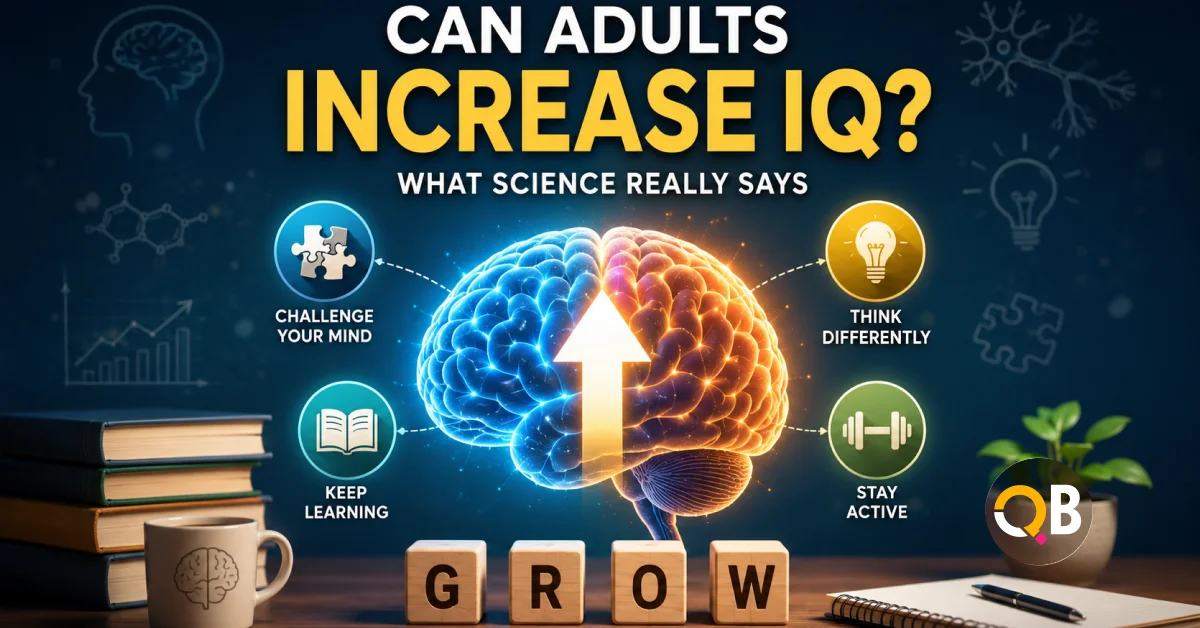
That’s why experts generally recommend combining brain games with broader cognitive habits such as:
- Reading challenging books
- Learning unfamiliar subjects
- Solving diverse types of problems
- Staying physically active
- Maintaining healthy sleep
- Engaging in meaningful social interaction
Together, these activities stimulate multiple brain systems rather than focusing on a single skill.
If you’re interested in testing your reasoning abilities, you can also try QuizBombs’ IQ Test, which includes a variety of cognitive challenges designed to assess different aspects of logical thinking.
Lifestyle Habits That Support Better Cognitive Performance
Although no lifestyle habit guarantees a higher IQ score, several everyday behaviors consistently support healthier brain function.
Prioritize Quality Sleep
Sleep plays an essential role in memory consolidation, learning, attention, and decision-making. Chronic sleep deprivation can temporarily reduce performance on many IQ-related tasks, even in highly intelligent individuals.
Exercise Regularly
Physical activity increases blood flow to the brain and supports long-term cognitive health. Studies consistently associate regular aerobic exercise with improved executive functioning, memory, and mental flexibility.
Keep Learning
One of the strongest predictors of lifelong cognitive health is continued learning. Whether you’re studying history, programming, music, or a new language, challenging your brain helps strengthen existing neural pathways while building new ones.
Our guide on how to improve your IQ explores practical strategies that support stronger cognitive performance through everyday habits.
Eat for Brain Health
A balanced diet rich in vegetables, fruits, whole grains, healthy fats, and lean protein provides nutrients that support normal brain function. While no single “brain food” raises IQ, overall nutrition contributes to long-term cognitive health.
Manage Stress
Long-term stress can interfere with concentration, memory, and decision-making. Healthy stress management through exercise, mindfulness, hobbies, or relaxation techniques helps maintain optimal mental performance.
What Results Can Adults Realistically Expect?
It’s natural to hope that a few months of mental training will lead to a significantly higher IQ score. While that can happen in some cases, it’s important to keep expectations realistic.
For most healthy adults, cognitive improvement is gradual rather than dramatic. You may notice that you:
- Learn new concepts more quickly.
- Stay focused for longer periods.
- Recognize patterns more efficiently.
- Solve unfamiliar problems with greater confidence.
- Remember information more effectively.
- Think more clearly under pressure.
These improvements can make everyday tasks and professional challenges feel easier, even if your official IQ score changes only slightly.
It’s also worth remembering that IQ tests measure performance on a particular day. Factors such as stress, fatigue, anxiety, illness, and lack of sleep can all influence your results. Preparing your mind and body before taking a test often helps you demonstrate your true cognitive ability.
If you’re planning to take an assessment, our guide on how to prepare for an IQ test offers practical tips for approaching the experience with confidence.
Common Myths About Increasing IQ
Because intelligence is a fascinating topic, there’s no shortage of misinformation online. Let’s separate a few common myths from what research actually suggests.
Myth 1: Adults Cannot Become Smarter
This is one of the most persistent misconceptions.
While your genetic potential doesn’t suddenly change in adulthood, your brain continues adapting throughout life. Learning, practice, and experience can improve many of the cognitive skills involved in intelligent thinking.
Myth 2: Brain Games Will Raise Your IQ by 20 Points
Many advertisements make bold claims about brain-training programs.
In reality, practicing puzzles can improve your performance on similar tasks, but there is little evidence that a single app dramatically boosts overall intelligence. A well-rounded approach that includes learning, exercise, sleep, and healthy habits is far more beneficial.
Myth 3: IQ Is the Only Measure of Intelligence
IQ is valuable because it measures reasoning and problem-solving ability, but it doesn’t capture every aspect of human intelligence.
Creativity, emotional awareness, communication, resilience, practical decision-making, and social understanding all contribute to success in life.
If you’re curious about another important aspect of cognitive ability, you may also enjoy reading IQ vs EQ: What’s the Difference? to understand how emotional intelligence complements traditional IQ.
Should You Try to Increase Your IQ?
Rather than focusing solely on raising a number, many psychologists encourage people to think about improving cognitive performance as a whole.
Developing better thinking habits has benefits that extend well beyond an IQ test.
For example, strengthening your reasoning skills may help you:
- Make better decisions at work.
- Learn new skills more efficiently.
- Adapt to unfamiliar situations.
- Solve everyday problems more creatively.
- Improve academic or professional performance.
- Build confidence when tackling complex challenges.
Viewed this way, pursuing lifelong learning becomes less about chasing a score and more about becoming a more capable thinker.
If you’re interested in understanding your current reasoning ability, taking a structured assessment can provide a useful starting point. QuizBombs offers several options, including the Accurate IQ Test and the Quick IQ Test, allowing you to explore different styles of cognitive assessment.
Why Measuring Progress Matters
One challenge with cognitive improvement is that progress isn’t always obvious day to day.
Keeping track of your performance over time can provide valuable insight into your development. Rather than comparing yourself with others, focus on whether you’re improving your own abilities.
You might notice that reasoning puzzles become easier, you process information more quickly, or you feel more confident tackling unfamiliar challenges. These are meaningful signs that your cognitive skills are developing, even if your IQ score remains relatively stable.
When taking online assessments, remember that consistency is more important than achieving a perfect score on any single attempt. Choosing well-designed tests and taking them under similar conditions gives you a more reliable picture of your progress.
If you’re wondering whether online assessments provide useful insights, our article on are online IQ tests accurate? explains what makes an online IQ test more trustworthy and how to interpret your results.
Frequently Asked Questions
Can adults really increase their IQ?
Adults can improve many of the cognitive skills associated with intelligence, such as reasoning, memory, and problem-solving. While dramatic IQ score increases are uncommon, lifelong learning and healthy habits can enhance overall cognitive performance.
Is IQ mostly determined by genetics?
Genetics play an important role in intelligence, but environmental factors such as education, nutrition, health, and continuous learning also influence cognitive development throughout life.
What activities help improve cognitive abilities?
Regular exercise, quality sleep, learning new skills, reading, solving challenging problems, and maintaining social engagement all support healthy brain function and cognitive performance.
Do brain-training apps increase IQ?
Brain-training apps can improve performance on the tasks you practice, but current research suggests they have limited effects on overall IQ. A balanced lifestyle and varied mental challenges provide broader cognitive benefits.
Should I take an IQ test more than once?
Occasional retesting can help measure progress, especially if enough time has passed and you’ve continued developing your cognitive skills. Repeating the same test too frequently may lead to familiarity rather than genuine improvement.