Is 120 a Good IQ?
If you’ve recently taken an IQ test and received a score of 120, you might be wondering what it actually means. Is it considered high? Does it qualify as gifted? Could it help you succeed in school or your career?
The short answer is yes. An IQ of 120 is generally considered a very good score. It places you well above the average range and suggests strong reasoning, problem-solving, and learning abilities.
That said, an IQ score is only one way of measuring cognitive ability. It doesn’t determine your creativity, emotional intelligence, work ethic, or potential for success. Many people with average IQ scores achieve extraordinary things through persistence, curiosity, and practical skills, while some people with exceptionally high IQs never fully develop their talents.
Understanding what a score of 120 really represents can help you interpret your results more accurately and avoid common misconceptions about intelligence.
If you’re still exploring your cognitive abilities, taking a well-designed assessment can provide a clearer picture of your strengths.
What Does an IQ Score of 120 Mean?
Most modern IQ tests are designed so that 100 represents the average score. The majority of people score somewhere between 85 and 115, forming what psychologists call the average range.
A score of 120 sits comfortably above that average. On many standardized IQ scales, it falls into the Superior or High Average category, depending on the specific assessment used.
In practical terms, someone with an IQ of 120 may find it easier to:
- Learn new concepts quickly.
- Recognize patterns.
- Solve unfamiliar problems.
- Think logically under pressure.
- Understand complex ideas with less repetition.
These strengths often become noticeable in educational settings or careers that require analytical thinking. However, they don’t automatically guarantee success. Motivation, discipline, communication skills, and emotional resilience remain just as important.
If you’re unfamiliar with how IQ scores are measured, our guide on What Is an IQ Test? Everything You Need to Know explains how modern intelligence tests work and what they actually measure.
How Rare Is an IQ of 120?
One of the most common questions people ask after seeing their results is whether their score is unusual.
The answer is yes, but perhaps not in the way many people expect.
An IQ score of 120 places you roughly in the top 10% of the population. That means approximately nine out of every ten people score lower.
While it isn’t exceptionally rare, it is certainly above average and reflects stronger-than-average cognitive performance.
To put this into perspective:
- Around half of all people score between 90 and 110.
- Scores above 115 become increasingly less common.
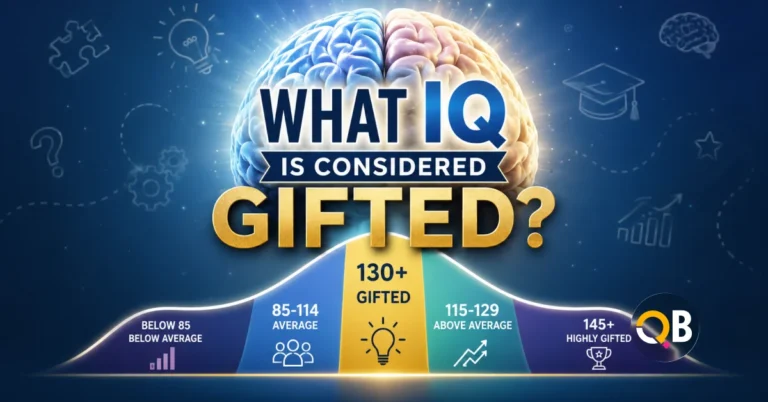
- Scores above 130 are generally considered gifted.
- Scores above 145 are exceptionally rare.
Many people assume that only genius-level scores are valuable, but that’s a misunderstanding. A score of 120 already represents an impressive level of reasoning ability that can be beneficial in academic, professional, and everyday problem-solving situations.
If you’re curious about where average scores fall globally, our article on What Is the Average IQ? provides additional context without focusing solely on high scores.
Is 120 Considered Gifted?
This is where some confusion often arises.
An IQ of 120 is high, but it is not usually classified as gifted.
Most educational psychologists and organizations use 130 as the approximate threshold for giftedness, although some programs may use slightly different criteria depending on their goals and assessment methods.
That means someone with a score of 120 demonstrates strong intellectual ability but may not meet the formal definition used for gifted education programs.
More importantly, giftedness is about much more than a single number.
Many psychologists also consider factors such as:
- Creative thinking.
- Exceptional curiosity.
- Rapid learning.
- Advanced problem solving.
- Consistent high achievement.
- Specialized talents.
Someone with an IQ of 120 who is highly motivated may outperform someone with an IQ of 135 who lacks discipline or interest.
If you’re interested in understanding where gifted classifications begin, you’ll find a more detailed explanation in What IQ Is Considered Gifted?.
Likewise, if you’re wondering whether your score could change over time, our guide on Can IQ Change Over Time? explores what researchers currently know about intelligence development.
What Can Someone With an IQ of 120 Achieve?
An IQ score of 120 often reflects the ability to understand complex ideas, solve unfamiliar problems, and learn efficiently. While it is not a guarantee of success, it provides a strong cognitive foundation that can be valuable across many areas of life.
People with an IQ in this range are often comfortable working with abstract concepts and adapting to new challenges. They may find it easier to recognize patterns, process information quickly, or connect ideas that others overlook.
That said, intelligence is only one ingredient in achievement. Long-term success usually comes from a combination of abilities, including:
- Consistent effort
- Curiosity and a willingness to learn
- Good communication skills
- Emotional resilience
- Time management
- Adaptability
History offers countless examples of successful entrepreneurs, artists, athletes, and leaders who reached remarkable heights because of persistence and dedication, not simply because they had exceptionally high IQ scores.
Rather than asking, “Is 120 high enough?” a more useful question is, “How can I make the most of the abilities I have?”
How Does an IQ of 120 Compare in School and Work?
In academic settings, people with an IQ of 120 often perform well when they stay engaged with the material. They may grasp new concepts more quickly than their peers and require less repetition to master complex topics.
This can be an advantage in subjects such as:
- Mathematics
- Science
- Engineering
- Computer programming
- Finance
- Law
- Research
However, academic success still depends heavily on study habits, organization, and motivation. A student with average cognitive ability who studies consistently can easily outperform someone with a higher IQ who rarely puts in the effort.
The same principle applies in the workplace.
Many careers reward qualities that IQ tests do not measure, including leadership, collaboration, creativity, and emotional intelligence.
Someone with an IQ of 120 may excel in careers involving analytical thinking, such as software development, engineering, medicine, architecture, or data analysis. But success in these fields still depends on continuous learning and practical experience.
This is one reason psychologists caution against viewing IQ as a prediction of future success. It measures certain aspects of reasoning, not the full range of human ability.
If you’re interested in developing your cognitive skills further, our guide on How to Improve Your IQ explores evidence-based habits that support learning, memory, and problem-solving.
Can Your IQ Score Change Over Time?
Receiving an IQ score of 120 naturally raises another question.
Will that score always stay the same?
The answer is more nuanced than many people expect.
While intelligence tends to remain relatively stable throughout adulthood, IQ scores can change slightly due to several factors, including:
- Age
- Education
- Health
- Sleep quality
- Stress levels
- Familiarity with testing formats
For example, someone taking an IQ test after a poor night’s sleep may perform differently than they would under ideal conditions.
Likewise, practicing reasoning puzzles or becoming familiar with common question types can improve test performance, even if your underlying intelligence hasn’t changed dramatically.
This is why reputable IQ assessments use carefully standardized scoring methods designed to reduce outside influences as much as possible.
If you’d like to explore this topic in greater depth, read Can IQ Change Over Time?, where we look at what psychological research says about intelligence across different stages of life.
Are Online IQ Tests Reliable?
Many people discover they have an IQ around 120 after taking an online assessment.
That often leads to another important question.
Can you trust the result?
The answer depends entirely on the quality of the test.
Some online IQ tests are designed using established reasoning principles and can provide a useful estimate of cognitive ability. Others exist mainly for entertainment and should not be interpreted as scientifically accurate.
A trustworthy online IQ assessment should include a balanced mix of question types, such as:
- Pattern recognition
- Logical reasoning
- Numerical reasoning
- Spatial thinking
- Verbal reasoning
It should also provide results based on standardized scoring rather than arbitrary percentages or simple quiz scores.
If you’ve taken multiple online tests and received similar results around 120, that’s generally a stronger indication than relying on a single assessment alone.
To understand the strengths and limitations of digital assessments, see Are Online IQ Tests Accurate?, which explains what separates meaningful tests from purely recreational quizzes.
Preparing for a Better Assessment Experience
If you’re planning to take another IQ test, your goal shouldn’t be to “game” the score. Instead, focus on giving yourself the best opportunity to perform at your true ability.
A few simple habits can make a noticeable difference:
- Get enough sleep the night before.
- Choose a quiet environment without distractions.
- Read each question carefully before answering.
- Don’t rush through difficult problems.
- Stay calm if you encounter unfamiliar questions.
Most IQ tests are designed to include questions that become progressively harder. It’s completely normal not to answer every question correctly.
Approaching the test with a clear mind often leads to a more accurate reflection of your reasoning ability.
For more practical advice, our article How to Prepare for an IQ Test shares helpful strategies without encouraging memorization or shortcuts.
Common Myths About Having an IQ of 120
IQ scores are often surrounded by misconceptions, especially online. Seeing a score of 120 might leave you wondering whether you’re “smart enough” or whether that number defines your future. In reality, IQ is much more nuanced than many people realize.
Let’s clear up some of the most common myths.
Myth 1: An IQ of 120 Means You’re a Genius
Not quite.
A score of 120 is well above average and indicates strong cognitive ability, but it is generally below the threshold most psychologists use for giftedness. While it’s an excellent score, it doesn’t automatically place someone in the “genius” category.
More importantly, intelligence exists on a spectrum. There isn’t a magical cutoff where someone suddenly becomes capable of extraordinary achievements.
Myth 2: IQ Predicts Success in Every Area of Life
This is one of the biggest misconceptions.
Research consistently shows that IQ can predict certain academic and occupational outcomes, particularly in roles requiring complex reasoning. However, it cannot fully predict happiness, career satisfaction, creativity, leadership, or personal fulfillment.
Many qualities contribute to success, including:
- Emotional intelligence
- Communication skills
- Persistence
- Adaptability
- Curiosity
- Self-discipline
Someone with an IQ of 120 who continuously learns and embraces challenges may achieve far more than someone with a significantly higher IQ who lacks motivation.
Myth 3: Your IQ Can Never Change
While your underlying cognitive abilities tend to remain relatively stable during adulthood, your measured IQ score can vary slightly depending on factors such as health, education, stress, sleep, and testing conditions.
That’s why experts recommend interpreting IQ as an estimate rather than an absolute label.
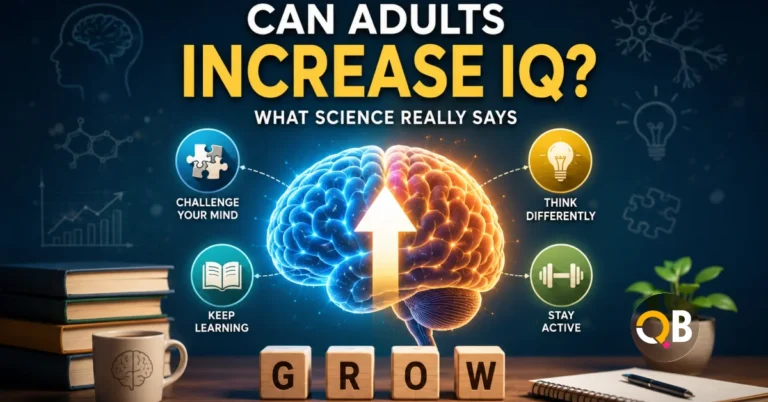
If you’re interested in the science behind this, our article on Can Adults Increase IQ? explores how learning, brain health, and cognitive training may influence performance over time.
IQ Is Only One Part of Intelligence
When people hear the word “intelligence,” they often think only about IQ scores. But human ability is much broader than what a standardized reasoning test can measure.
IQ assessments are excellent at evaluating skills such as:
- Logical reasoning
- Pattern recognition
- Working memory
- Spatial reasoning
- Analytical thinking
They don’t directly measure qualities like:
- Creativity
- Empathy
- Leadership
- Social awareness
- Motivation
- Artistic talent
- Practical wisdom
Imagine two people with the same IQ score of 120.
One might become an exceptional software engineer because they enjoy solving technical problems. The other could thrive as a teacher, entrepreneur, or designer by combining strong reasoning with creativity and interpersonal skills.
Neither path is more “intelligent” than the other. They simply reflect different strengths.
Recognizing this broader view of intelligence helps prevent the common mistake of reducing a person’s potential to a single number.
IQ vs. Emotional Intelligence
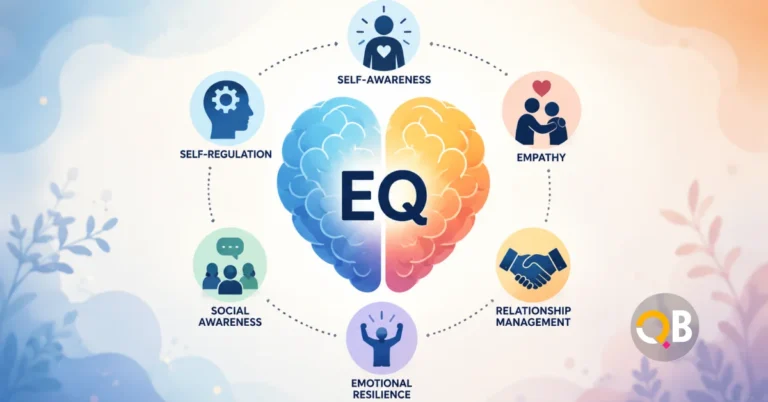
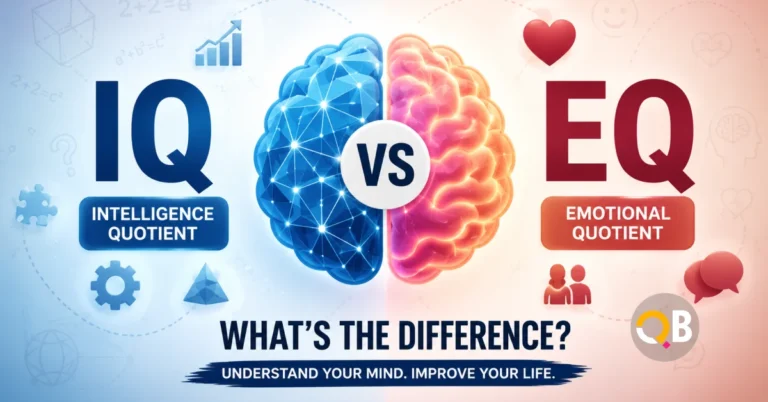
One area that often surprises people is the difference between IQ and emotional intelligence, often called EQ.
IQ focuses on how effectively you process information and solve problems.
EQ reflects how well you understand emotions, communicate with others, manage relationships, and respond to challenging situations.
Both are valuable, and they often complement one another.
For example, someone with a high IQ may excel at analyzing complex problems, while someone with strong emotional intelligence may be better at leading teams, resolving conflicts, or building meaningful relationships.
Many successful professionals develop both cognitive and emotional skills throughout their careers.
If you’re curious about how these two forms of intelligence compare, our guide on IQ vs. EQ: What’s the Difference? explains how each contributes to learning, work, and everyday life.
Should You Take Another IQ Test?
If your score of 120 came from a reputable assessment and the result seems consistent with your abilities, there may be little reason to keep taking test after test in hopes of getting a higher number.
However, taking another assessment can be worthwhile if:
- Your original test was very short or purely for entertainment.
- You completed it in distracting conditions.
- You want a more comprehensive evaluation.
- You’re interested in exploring different reasoning skills.
A quality assessment typically measures several aspects of intelligence rather than relying on a single type of question.
For example, some tests emphasize logical reasoning, while others include numerical, verbal, abstract, or spatial challenges to build a more balanced picture of cognitive ability.
If you’d like a more complete understanding of your reasoning strengths, you can explore the QuizBombs IQ Test . It includes a variety of question types designed to assess different aspects of problem-solving in an engaging format.
Remember, the purpose isn’t to chase a particular number. It’s to better understand how you think, learn, and approach challenges.
So, Is 120 a Good IQ?
For most people, the answer is a confident yes.
A score of 120 places you comfortably above the average range and suggests strong reasoning and learning abilities. It’s a score that many people would be pleased to receive, and it reflects cognitive strengths that can be valuable in education, work, and everyday decision-making.
At the same time, your IQ is only one chapter in your story.
Your character, curiosity, determination, emotional intelligence, and willingness to keep learning will have just as much influence on your future as any number on a test.
Rather than comparing yourself to others, use your results as a starting point for understanding your strengths and identifying opportunities to grow. Intelligence is most valuable when it’s applied with purpose, creativity, and persistence.
Whether your score is 90, 100, 120, or even higher, the goal isn’t simply to measure intelligence. It’s to use your abilities in meaningful ways that help you continue learning throughout life.
Frequently Asked Questions
Is an IQ of 120 considered high?
Yes. An IQ of 120 is considered above average and is often classified as High Average or Superior, depending on the test. It places you roughly in the top 10% of the population, indicating strong reasoning, learning, and problem-solving abilities.
Can someone with an IQ of 120 be successful?
Absolutely. An IQ of 120 provides a strong cognitive advantage, but success also depends on factors like motivation, emotional intelligence, perseverance, and continuous learning. Many successful people achieve their goals through a combination of intelligence and consistent effort.
Is an IQ of 120 considered gifted?
Not usually. Most psychologists and gifted education programs use an IQ of around 130 as the benchmark for giftedness. However, a score of 120 is still an excellent result that reflects above-average intellectual ability.
Should I retake an IQ test if I scored 120?
If your score came from a reliable and well-designed assessment, there’s usually no need to keep retaking tests. However, if the original test was very short, taken under poor conditions, or intended only for entertainment, taking a more comprehensive assessment can provide a clearer understanding of your cognitive strengths.
Are online IQ tests accurate?
Some online IQ tests provide a useful estimate of reasoning ability, while others are designed purely for entertainment. Choosing a well-structured assessment that includes logical, numerical, verbal, and abstract reasoning questions will generally provide more meaningful results. You can also learn more in our Are Online IQ Tests Accurate? guide.